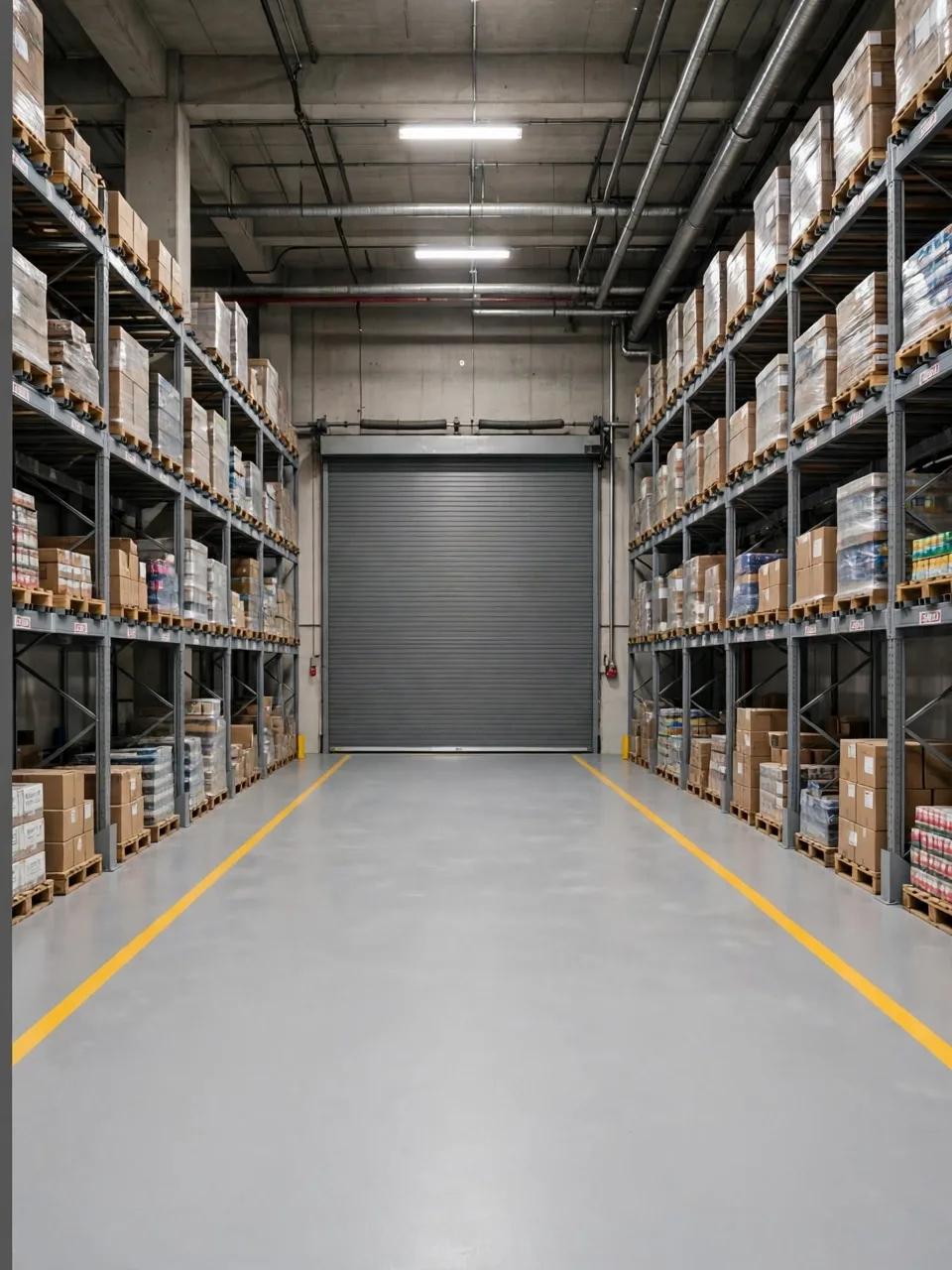
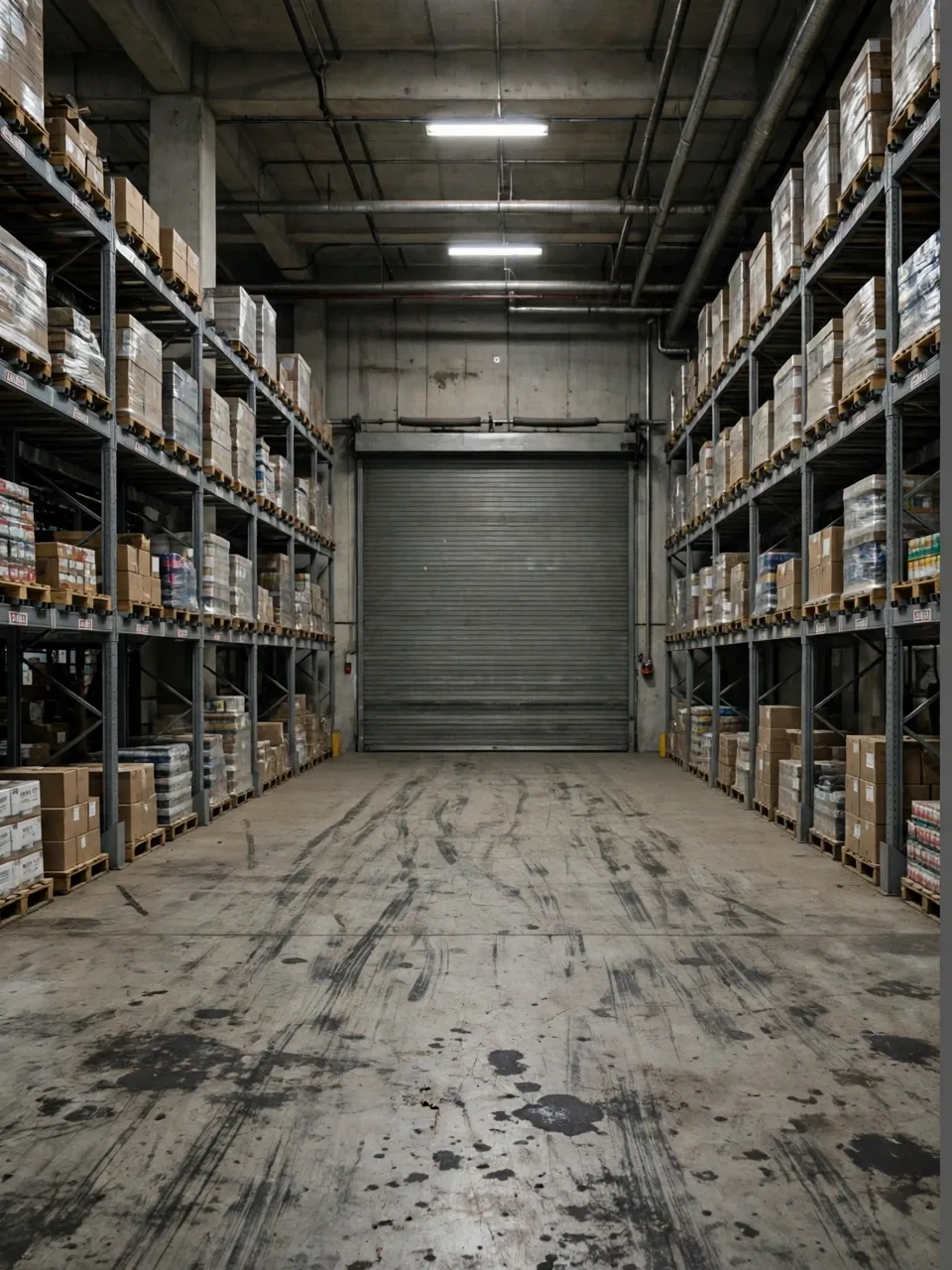
Warehouse epoxy flooring in Springfield is built for forklifts, pallet jacks, and the dust war every bare slab wages against stored goods. We phase bays so your operation keeps shipping while the floor transforms.
Warehouse Epoxy Flooring in Springfield, VA by Springfield Epoxy Flooring Company
A Warehouse Floor That Works as Hard as the Crew
Springfield warehousing clusters where the trucks are: the Fullerton Road and Newington corridors feeding Interstate 95, and the Backlick Road parks. Inside those buildings, bare concrete sheds dust onto inventory, joints crumble under forklift wheels, and spilled anything becomes a permanent stain map of the last decade.
A warehouse system answers with build and detail. We repair joints first because they fail first, grind the slab to a bondable profile, and lay a high build system with the texture your traffic needs. Aisle lines, walkways, and staging zones can be set into the finish itself, so the floor starts directing traffic the day it cures.
Inside a Warehouse Installation
Warehouse scope in Springfield is written bay by bay:
Joint survey and repair along forklift and pallet lanes
Grinding and degreasing across the full work area
High build epoxy system matched to loads and turning traffic
Aisle lines, safety walkways, and zone markings in durable colors
Phased scheduling that keeps part of the floor in service
The Joint Problem, Solved First
Warehouse floors die at their joints. Forklift wheels strike the same seams thousands of times, edges spall, and the crumble migrates. Our warehouse scopes therefore start at the joints: saw cut damage is cleaned out, edges are rebuilt with load rated material, and only then does the field get ground and coated. Skipping this order saves a day and costs a floor, and we will not quote it the other way.
Recent Project: Warehouse Epoxy Floor in Newington
BEFOREAFTER
Distribution bay in Newington: joints rebuilt along the main lane, high build system phased so one side shipped while the other cured, walkways set into the finish.
Turnaround
5 days
Final Price
$18,500
Light, Dust, and the Daily Sweep
The sealed surface reflects light back into the bay, which crews feel immediately in wide buildings. Dust drops off the inventory and out of the air, sweeping becomes a single pass instead of a campaign, and spills announce themselves on the surface where they can be handled early. Those are operational gains, not cosmetic ones.
Brighter bays without adding a single light fixture
Dust control that protects stored goods and equipment
Markings that survive because they are part of the floor
Auto scrubbers and standard detergents suit these systems well. We flag the joints and any impact damage at handover so your maintenance log starts with a map of what to watch.
Markings deserve the same seriousness. Lines painted on top of a finished floor wear off in the lanes that need them most. Lines set into the system itself, in durable colors under the topcoat’s protection, stay legible through seasons of turning traffic, which is how a floor keeps directing people long after the install crew is forgotten.
Timeline and Cure Windows
Warehouse calendars are written bay by bay, typically across three to six days depending on joint damage and area. Forklift traffic returns to a bay only after its full cure, while foot traffic and light pallet work reopen earlier in sequence. The phasing plan you approve shows each bay’s close and reopen dates, and our crew reports against it daily so your shipping schedule and our coating schedule never surprise each other.
Phase Your Springfield Warehouse Floor
Walk the bays with us and we will write the phasing and the price together.