Basement epoxy flooring in Springfield turns the coldest room in the house into finished space. We test every lower level slab for moisture first, because Accotink Creek country keeps ground water close, then seal it for daily living.
Basement Epoxy Flooring in Springfield, VA by Springfield Epoxy Flooring Company
A Lower Level That Stops Feeling Like Storage
Plenty of Springfield basements spend decades as clean, dry looking storage that nobody wants to furnish. The concrete sheds dust onto everything, feels cold through socks, and shows damp shadowing after wet weeks. Carpet hides some of that and traps the rest, which is why so many lower levels get ripped out twice.
Epoxy answers the room differently. Once we test the slab and place mitigation where the readings require it, the sealed surface stops dust at the source, shrugs off spills, and brightens a room that gets little natural light. Family rooms, guest space, gyms, and quiet offices all sit comfortably on the same system.
How a Basement Floor Gets Built
Basement work in Springfield follows a moisture first sequence:
Moisture testing at several points across the slab, readings explained in plain words
Mitigation primer wherever vapor pressure runs high
Grinding and repair of cracks, low spots, and old adhesive residue
Base coat with your chosen finish: flake, solid color, or metallic
Topcoat in gloss or satin, matched to how the room will be used
How a Basement Job Is Sequenced
Testing comes before everything, sometimes days before, so mitigation can be planned rather than improvised. Prep day clears the room, grinds the slab, and handles repairs and any mitigation primer. Coating days layer base, finish, and topcoat with cure windows between them, and we keep the stairwell path protected the whole time. You get return to use timing for feet, furniture, and heavy storage in writing before we start, because a basement schedule runs a household.
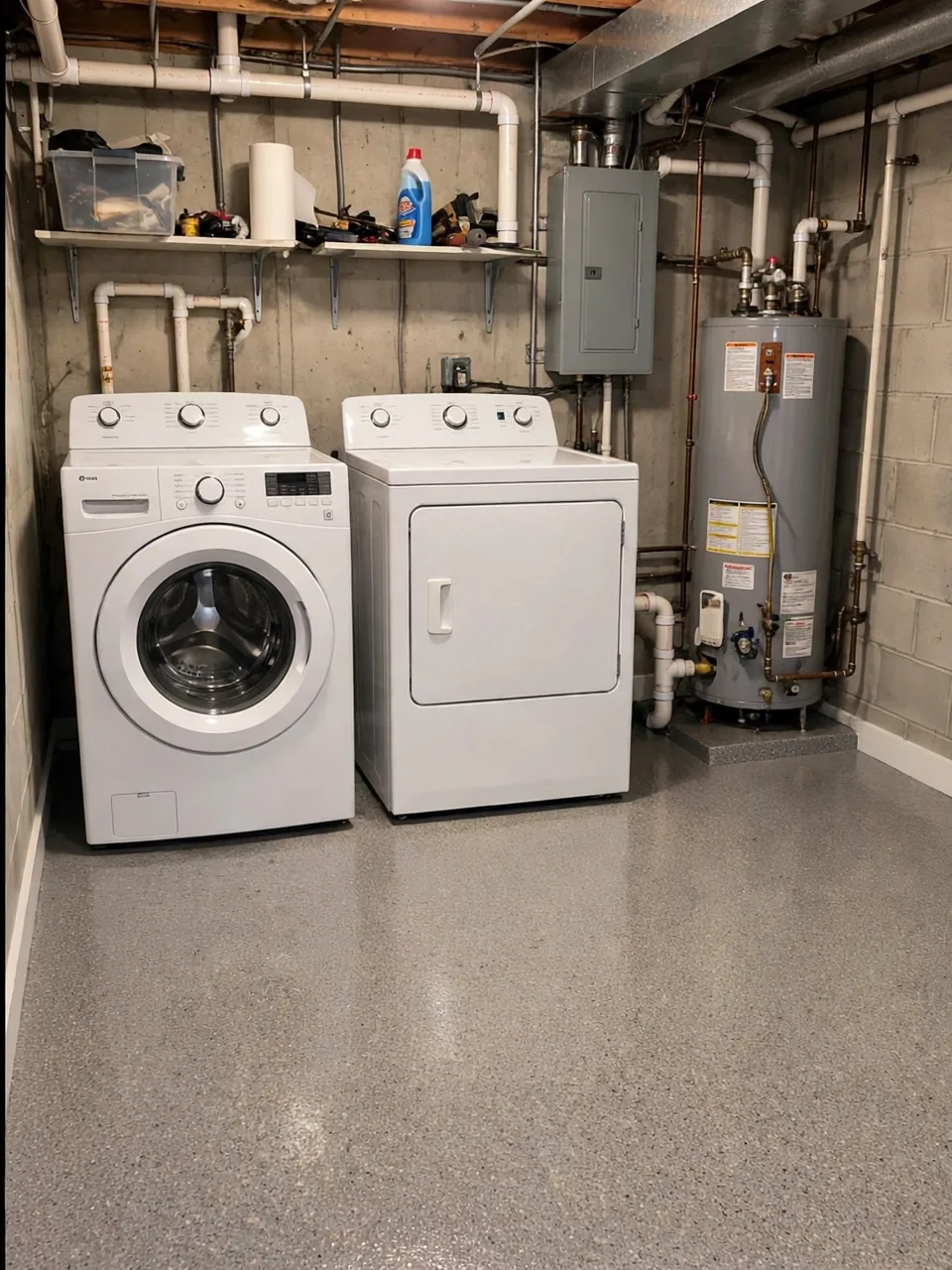
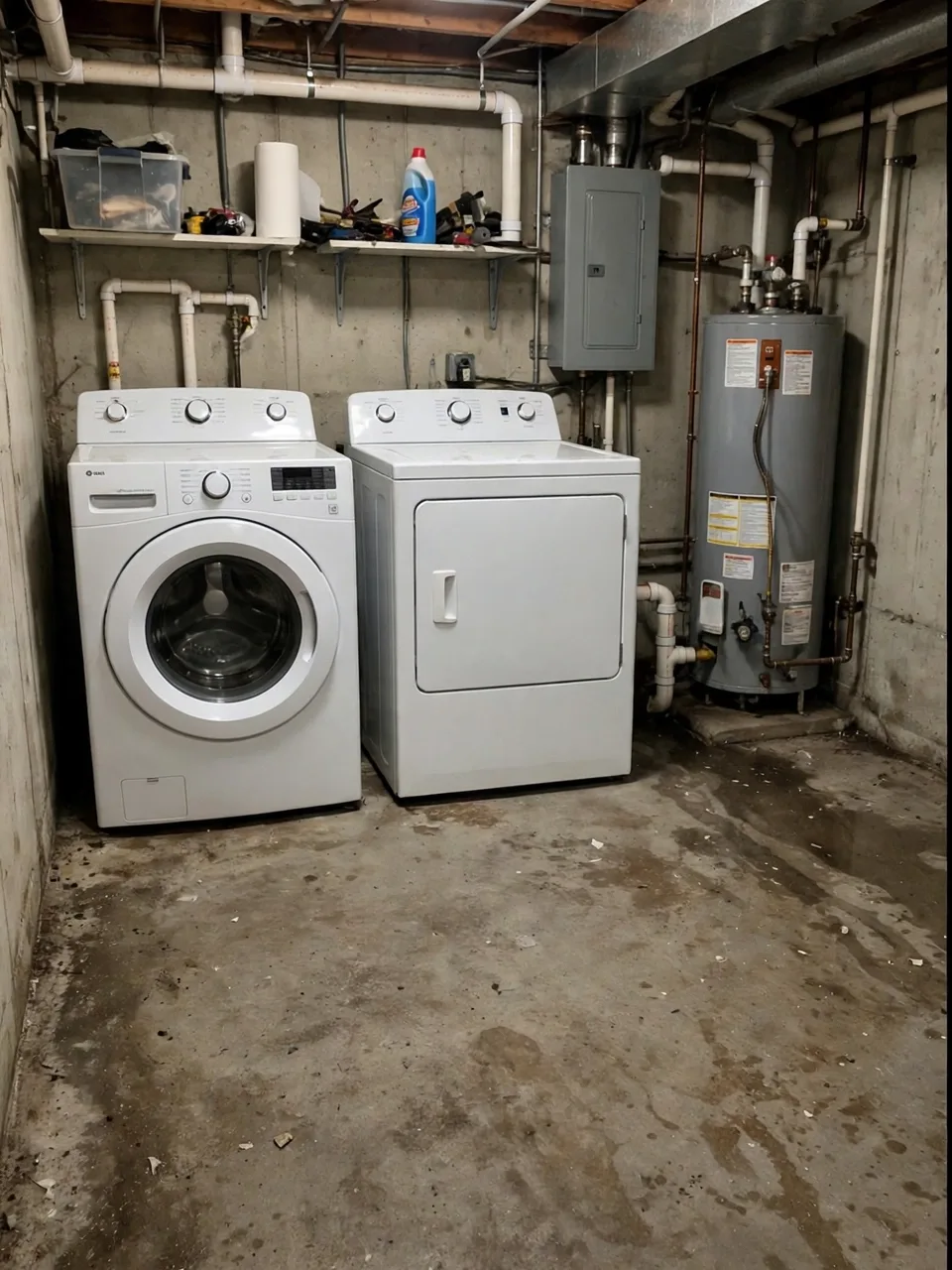
Recent Project: Flake Basement Floor in West Springfield
BEFOREAFTER
Family room and guest space in West Springfield: slab tested, mitigation placed along the creek side wall, warm flake blend finished with a low sheen topcoat.
Turnaround
3 days
Final Price
$5,450
Living on a Sealed Basement Floor
A finished basement in West Springfield or Saratoga usually becomes the most flexible room in the house within a month of the floor going down. Furniture sits level, rugs stay optional, and a spilled drink is a paper towel problem instead of a carpet problem. The floor also makes the room easier to heat, because the sealed surface stops the constant dust cycle that dulls lower level air.
Dust mop weekly, wet mop when the room needs it, and keep felt pads under heavy furniture legs. If your sump or water heater ever lets go, the sealed floor wipes dry instead of holding water in padding, which is one of the quiet reasons Springfield owners choose it.
One quiet advantage of a sealed basement floor shows up in winter. Heating air stops picking up concrete dust at the floor line, the room smells like a room instead of a cellar, and the dehumidifier works against the weather rather than against the slab itself. Owners mention it at the walkthrough more than any other change.
Timeline and Cure Windows
A Springfield basement usually takes three to four working days: testing and mitigation first where required, then prep, coating layers, and topcoat with cure windows between them. Light foot traffic returns first, furniture follows, and heavy storage comes last on the written schedule. Rooms that need extensive leveling or a full mitigation build sit at the longer end, and we will show you exactly why in the scope before you approve it.
Plan Your Springfield Basement Floor
Tell us how the room should work and we will start with a moisture test, not a sales pitch.